Learn how to find competitor backlinks using free and paid tools, plus a prioritization framework to identify which opportunities are actually worth pursuing.

Digital Gratified
SaaS SEO Experts
You've probably heard this advice: "Just find your competitors' backlinks and replicate them." It sounds simple. Logical, even.
But here's what nobody tells you: finding competitor backlinks is the easy part. And while some may suggest link exchanges as a quick fix, the reality is more nuanced. The hard part is figuring out which ones are actually worth pursuing, and which ones will waste your time.
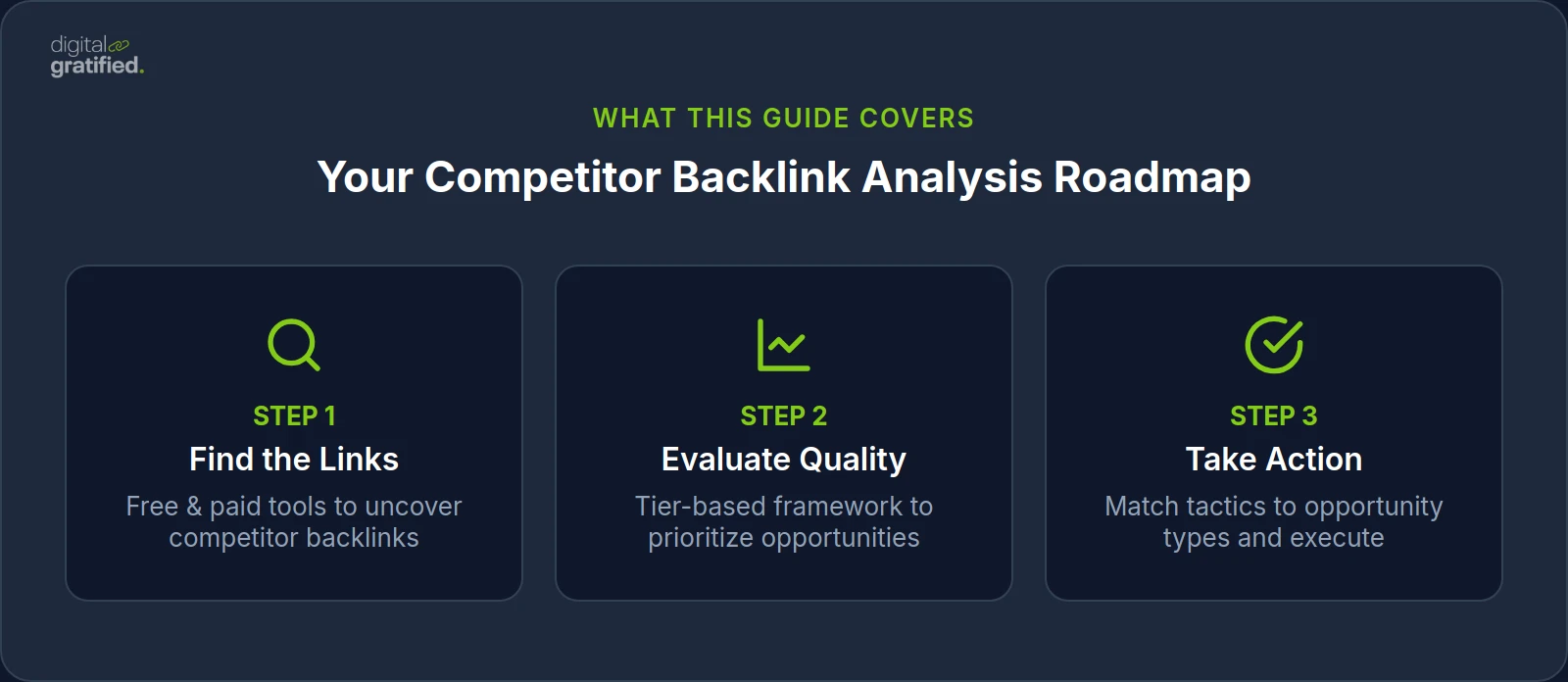
This guide skips the fluff. We'll cover exactly how to find competitor backlinks (free and paid methods), but more importantly, we'll show you how to evaluate which opportunities deserve your attention and how to prioritize them for maximum impact.
Why Competitor Backlink Analysis Actually Matters
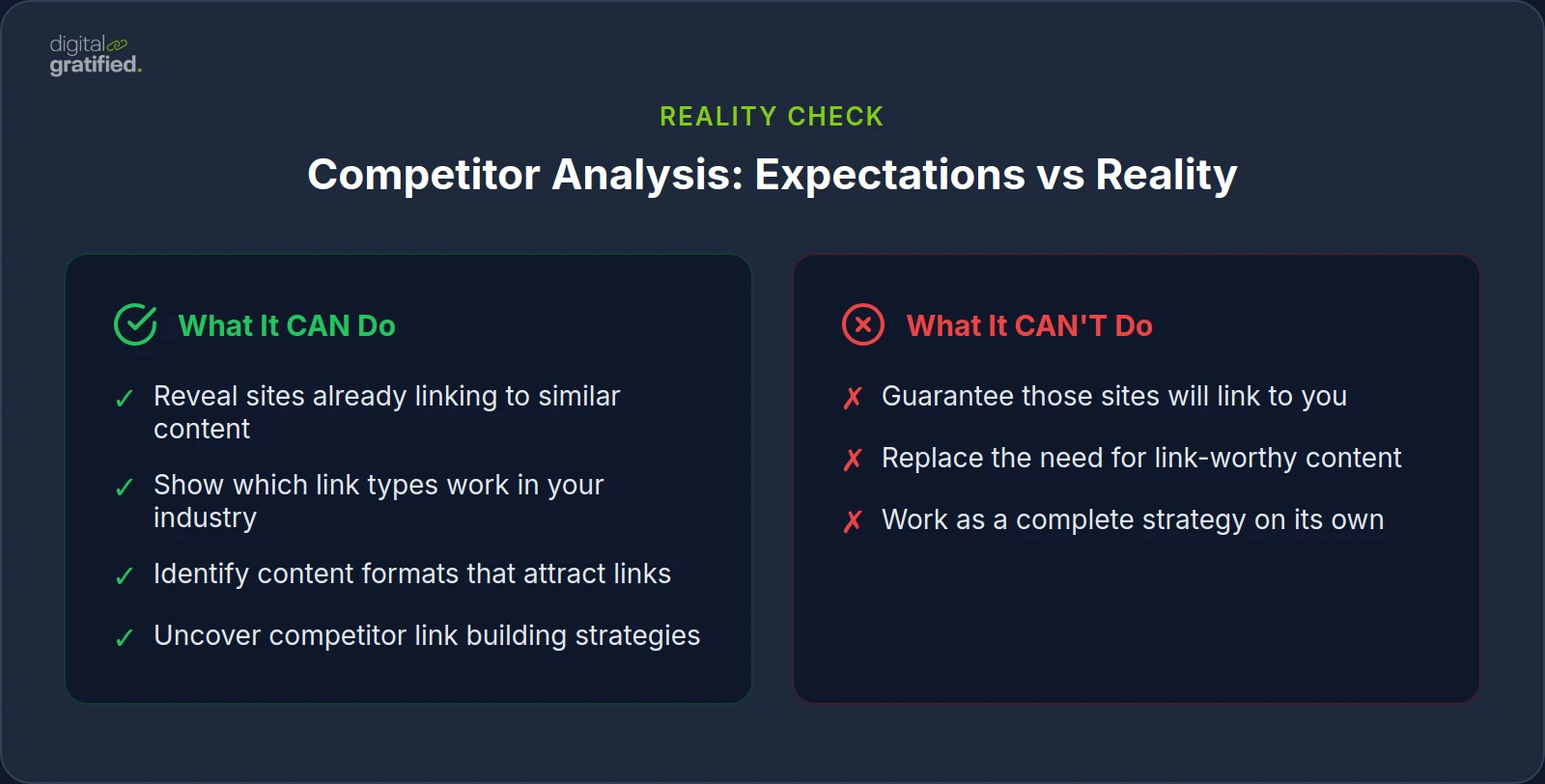
Let's be clear about what competitor backlink analysis can and can't do:
What it CAN do:
Reveal websites that already link to content like yours (warmer leads)
Show you which link types work in your industry
Identify content formats that attract links
Uncover link building strategies your competitors use
What it CAN'T do:
Guarantee those sites will link to you
Replace the need for link-worthy content
Work as a complete link building strategy on its own
Think of it this way: competitor backlink analysis is reconnaissance, not a battle plan. It tells you where opportunities might exist, but you still need a strategy to capture them.
Free Methods to Find Competitor Backlinks
Let's start with what you can do without spending money. Fair warning: free tools have real limitations, and I'll be honest about them.
Ahrefs Free Backlink Checker
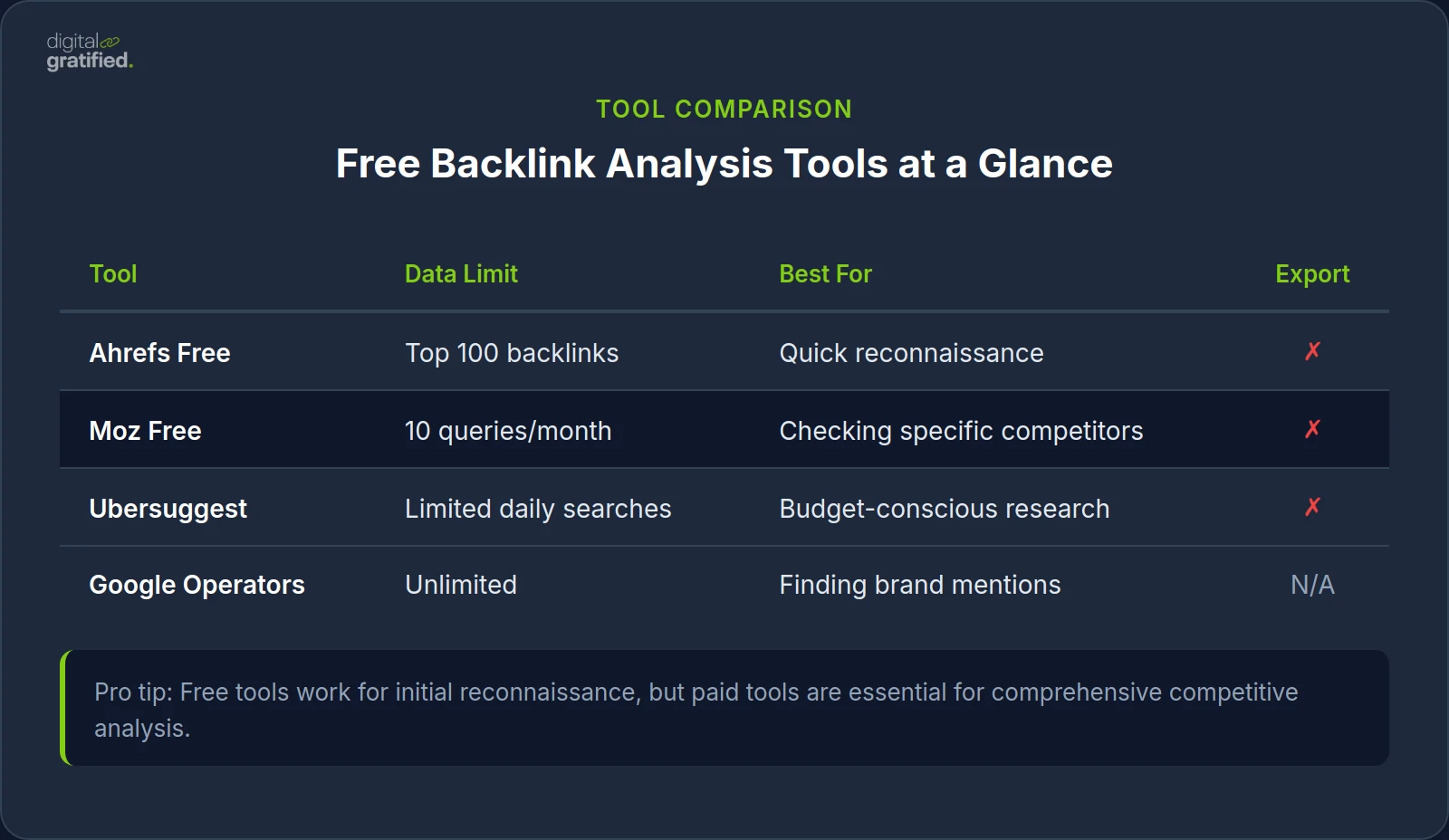
What it shows: Top 100 backlinks to any domain
The good: the workflow-based tools guide has one of the largest link databases. Even 100 backlinks can reveal patterns, like which content types attract links or which publications cover your competitors.
The limitations: 100 backlinks is a tiny sample. A competitor with 10,000 backlinks might have their best opportunities buried in the other 9,900 you can't see. You also can't filter by quality metrics or export data.
Best for: Quick reconnaissance when you want a general sense of who links to competitors.
Moz Link Explorer (Free Version)
What it shows: 10 link queries per month with limited data
The good: Moz's Domain Authority metric is widely used, so you can get a quick sense of link quality. The interface is beginner-friendly.
The limitations: 10 queries per month goes fast. If you have multiple competitors to analyze, you'll hit the limit quickly.
Best for: Checking a few specific competitors when you're just getting started.
Ubersuggest (Free Tier)
What it shows: Basic backlink data with limited daily searches
The good: More generous limits than some tools. Good for small businesses doing initial research.
The limitations: Data isn't as comprehensive as Ahrefs or Semrush. Limited filtering options.
Best for: Budget-conscious research when you need more than a few queries.
Google Search Operators (Completely Free)
You can use search operators to find some links manually:
link:competitor.com - This used to work but Google officially deprecated it. Don't waste your time.
"competitor.com" -site:competitor.com - Shows pages mentioning your competitor. Not backlinks specifically, but can reveal who talks about them.
The honest truth: Manual Google searching is time-intensive and incomplete. It's useful for finding a few opportunities but not for comprehensive analysis.
Paid Tools for Serious Backlink Research
If you're building links consistently, paid tools pay for themselves. Here's what each offers:
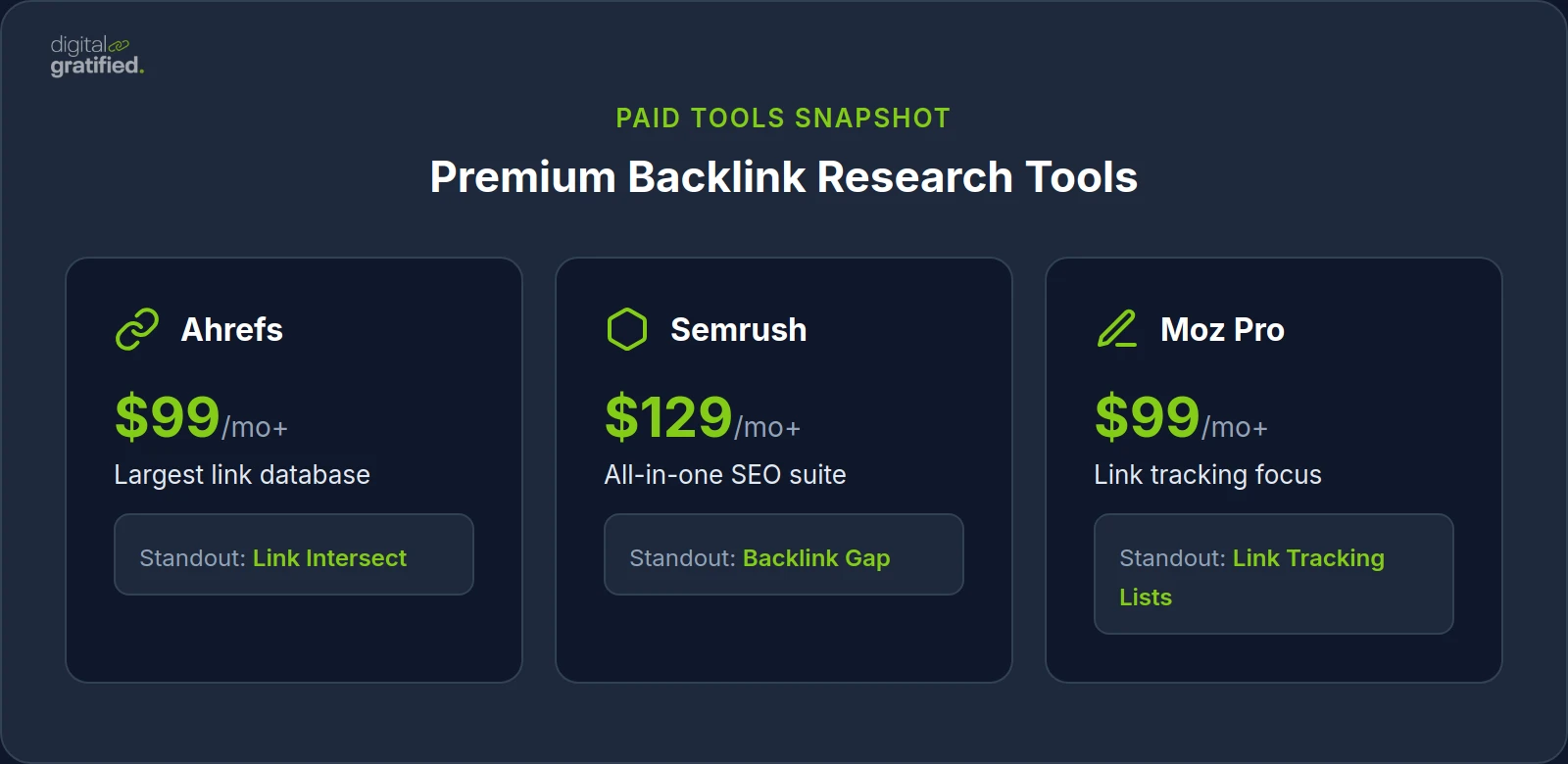
Ahrefs ($99+/month)
Standout feature: "Link Intersect" shows sites linking to multiple competitors but not you. These are your warmest opportunities.
Best for: In-depth competitive analysis. Largest link database makes it ideal when you need comprehensive data.
Semrush ($129+/month)
Standout feature: "Backlink Gap" tool visualizes opportunities across up to 5 competitors simultaneously.
Best for: All-in-one SEO needs. If you're already using Semrush for keyword research, the backlink tools integrate well.
Moz Pro ($99+/month)
Standout feature: Link Tracking Lists help you manage outreach after finding opportunities.
Best for: Teams who want to track their link building progress in one place.
Which One Should You Choose?
If you're only buying one tool, Ahrefs or Semrush are the most complete. Both offer trial periods: use them to analyze your specific competitors before committing.
The honest answer? Any of these tools will reveal more opportunities than you can realistically pursue. The bottleneck isn't finding backlinks: it's executing on them.
The Step-by-Step Process (That Actually Works)
Here's how to do competitor backlink analysis efficiently:
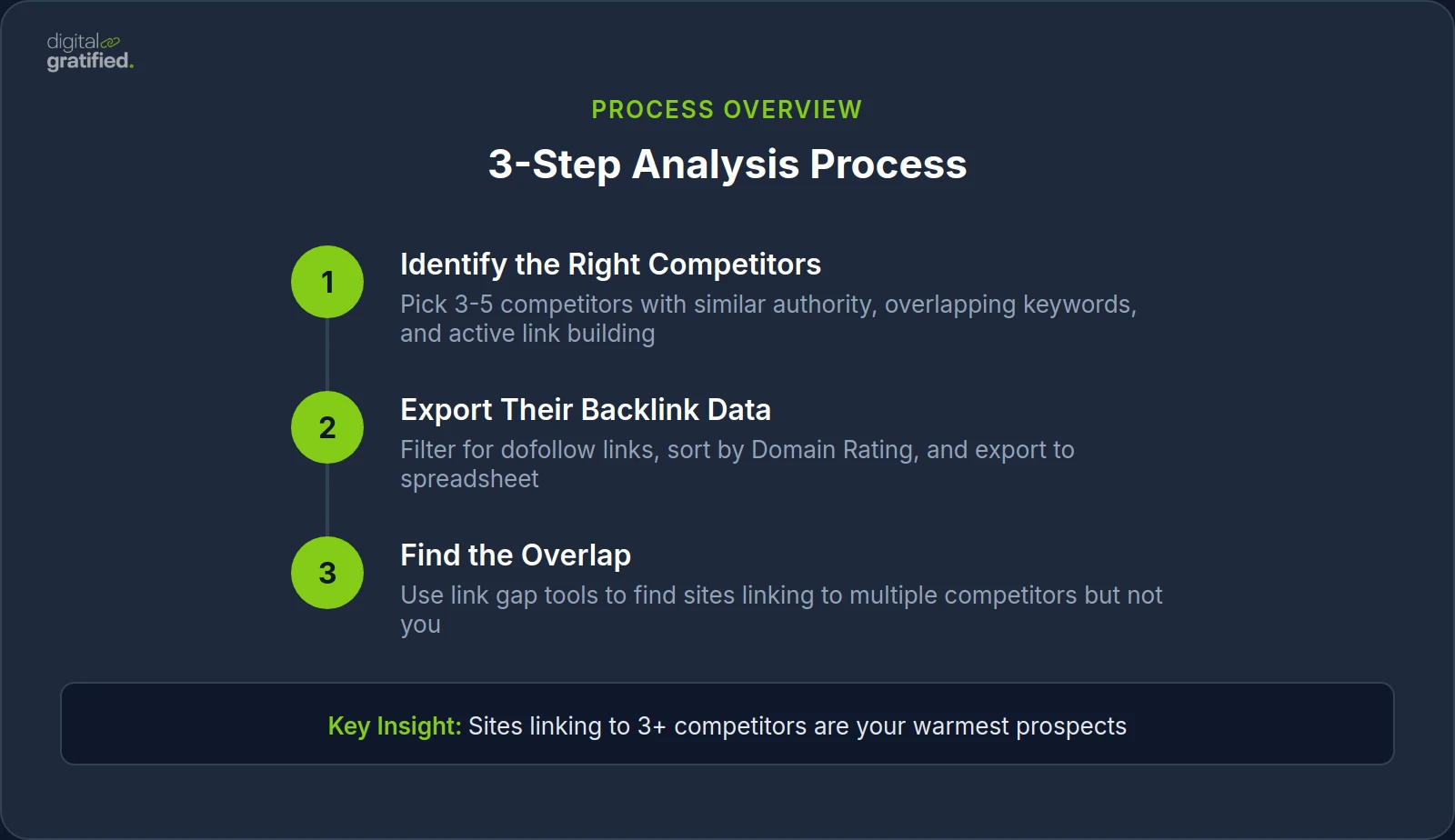
Step 1: Identify the Right Competitors
Not all competitors are useful for backlink research. You want:
Similar authority level: A startup analyzing Enterprise SaaS giants will find mostly unattainable links
Overlapping keywords: They should rank for terms you're targeting
Active link building: Some competitors have links from years ago but aren't actively building (less useful for finding current opportunities)
Start with 3-5 direct competitors, not 20.
Step 2: Export Their Backlink Data
In whatever tool you're using:
Enter competitor URL
Navigate to backlinks section
Filter for "dofollow" links (these pass SEO value)
Sort by Domain Rating or Domain Authority (highest first)
Export to spreadsheet
Repeat for each competitor.
Step 3: Find the Overlap
Most tools have a "link gap" or "link intersect" feature. This shows:
Sites linking to multiple competitors (highest opportunity: they clearly link to sites like yours)
Sites linking to competitors but not you (the gap you need to fill)
The overlaps are your starting point. If a site links to 3 of your 5 competitors, they're probably open to linking to you too.
The Evaluation Framework (The Part Most Guides Skip)
Finding backlinks is step one. Deciding which to pursue is where strategy happens.
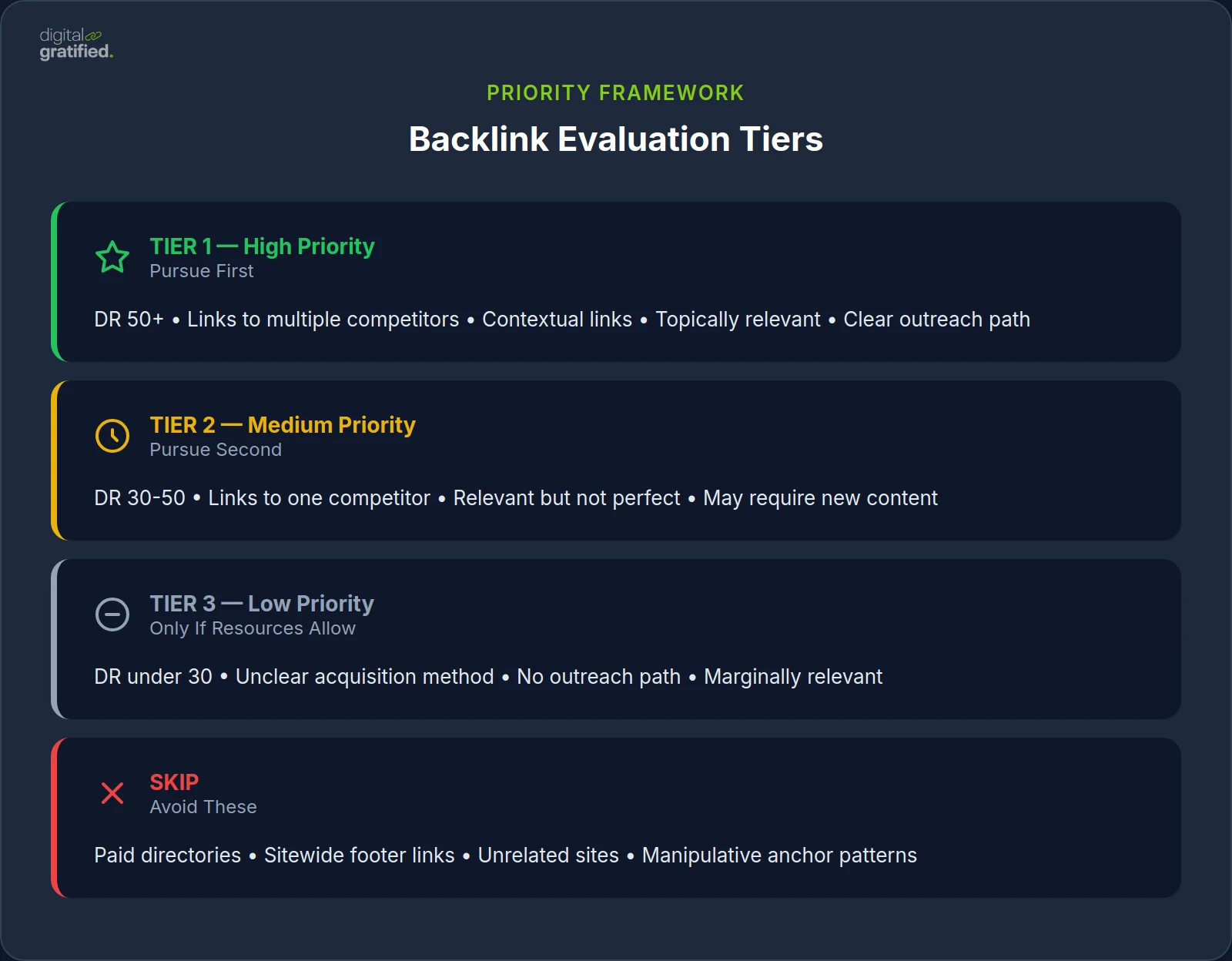
Not all backlinks are worth chasing. Use this framework to prioritize:
Tier 1: High Priority (Pursue First)
Characteristics:
Domain Rating/Authority 50+
Links to multiple competitors (proves they link out in your space)
Contextual links within content (not directories or footers)
Topically relevant to your business
Has clear outreach path (contact info, guest post pages, etc.)
Why prioritize: These are proven link sources with high value and reasonable acquisition likelihood.
Tier 2: Medium Priority (Pursue Second)
Characteristics:
Domain Rating/Authority 30-50
Links to one competitor
Relevant but not perfectly aligned to your content
Might require content creation to match their linking patterns
Why they're second: Still valuable but require more effort relative to outcome.
Tier 3: Low Priority (Only If Resources Allow)
Characteristics:
Domain Rating/Authority under 30
Unclear how they acquired the link
No obvious outreach path
Marginally relevant to your content
Why deprioritize: Time spent here could be better invested in Tier 1 and 2 opportunities.
Links to Skip Entirely
Paid link directories: These are often low-quality or penalized
Sitewide footer links: Little SEO value, often look spammy
Links from unrelated sites: A cooking blog linking to your B2B SaaS? Probably not valuable
Exact match anchor text patterns: If every link uses the same keyword anchor, it might be a manipulative pattern you don't want to replicate
From Analysis to Action: What Comes Next
You've found opportunities. Now what?
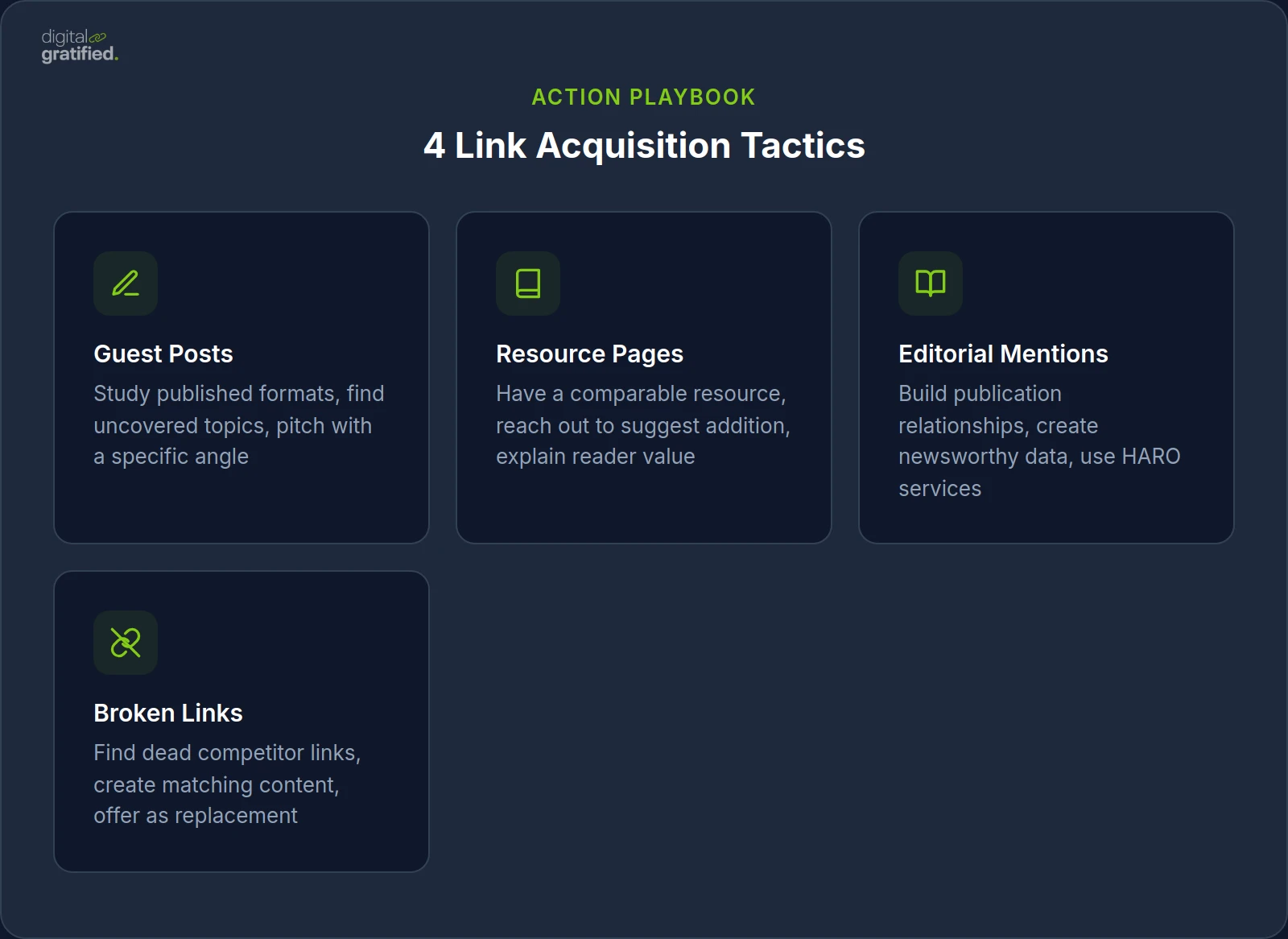
For Guest Post Opportunities
If competitors got links through guest posts:
Study the content format that got published
Identify topics they haven't covered yet
Pitch with a specific angle and outline
For Resource Page Links
If competitors appear on resource pages:
Make sure you have a comparable resource to offer
Reach out to suggest your addition
Explain why your resource adds value for their readers
For Editorial Mentions
If competitors get mentioned in articles:
Build relationships with those publications over time
Create newsworthy content or data they might cover
Consider if HARO or similar services could help
For Broken Link Building Opportunities
If you find dead links pointing to competitors:
Create content that matches what the dead page covered
Reach out suggesting your content as a replacement
When DIY Makes Sense (And When It Doesn't)
Competitor backlink analysis is something anyone can learn. But executing on what you find is a different matter.
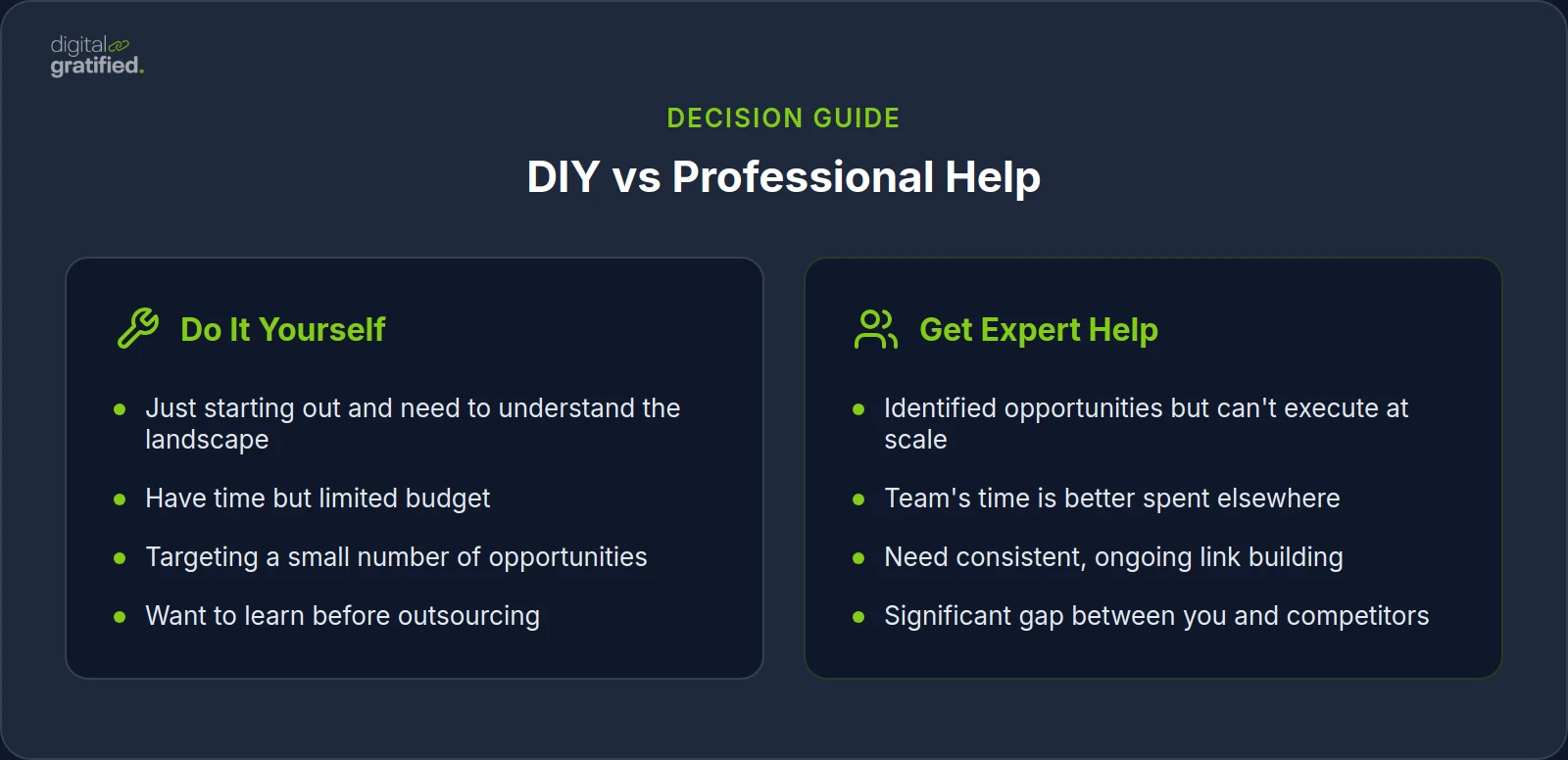
DIY Makes Sense When:
You're just starting and need to understand your competitive landscape
You have time but limited budget
You're targeting a small number of specific opportunities
You want to learn the process before potentially outsourcing
Getting Help Makes Sense When:
You've identified opportunities but can't execute at scale
Your team's time is better spent on other activities
You need consistent link building, not just occasional efforts
The gap between you and competitors is significant
There's no shame in either approach. What matters is being realistic about your capacity.
For a realistic look at what professional link building costs, our guide to link building pricing breaks down the numbers. And if you're specifically in the software space, our SaaS link building guide covers strategies that work for B2B companies.
Common Mistakes to Avoid
After analyzing thousands of competitor backlinks, here are the patterns that waste time:
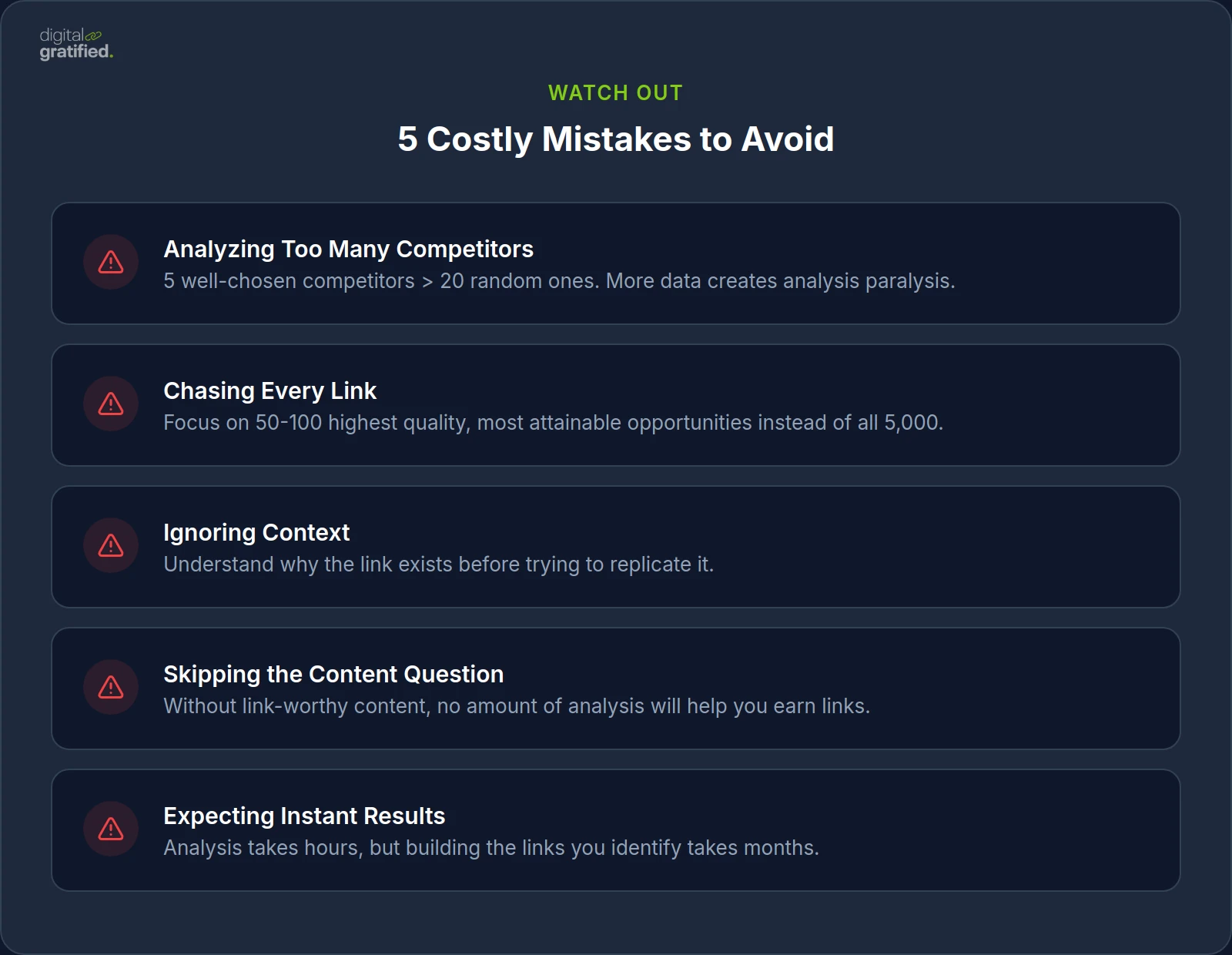
1. Analyzing Too Many Competitors
More data isn't always better. Five well-chosen competitors give you actionable insights. Twenty competitors give you analysis paralysis.
2. Chasing Every Link
Your competitor might have 5,000 backlinks. You don't need to replicate all of them. Focus on the 50-100 highest quality, most attainable opportunities.
3. Ignoring Context
A link is worthless without understanding why it exists. Did the competitor get it through a relationship? Paid placement? A unique piece of content? Context determines whether you can replicate it.
4. Skipping the Content Question
You can identify every link opportunity in your space, but if you don't have content worth linking to, it won't matter. Link building and SaaS content marketing strategy work together.
5. Expecting Instant Results
Competitor analysis takes a few hours. Building the links you identify takes months. Set realistic timelines.
Putting It All Together
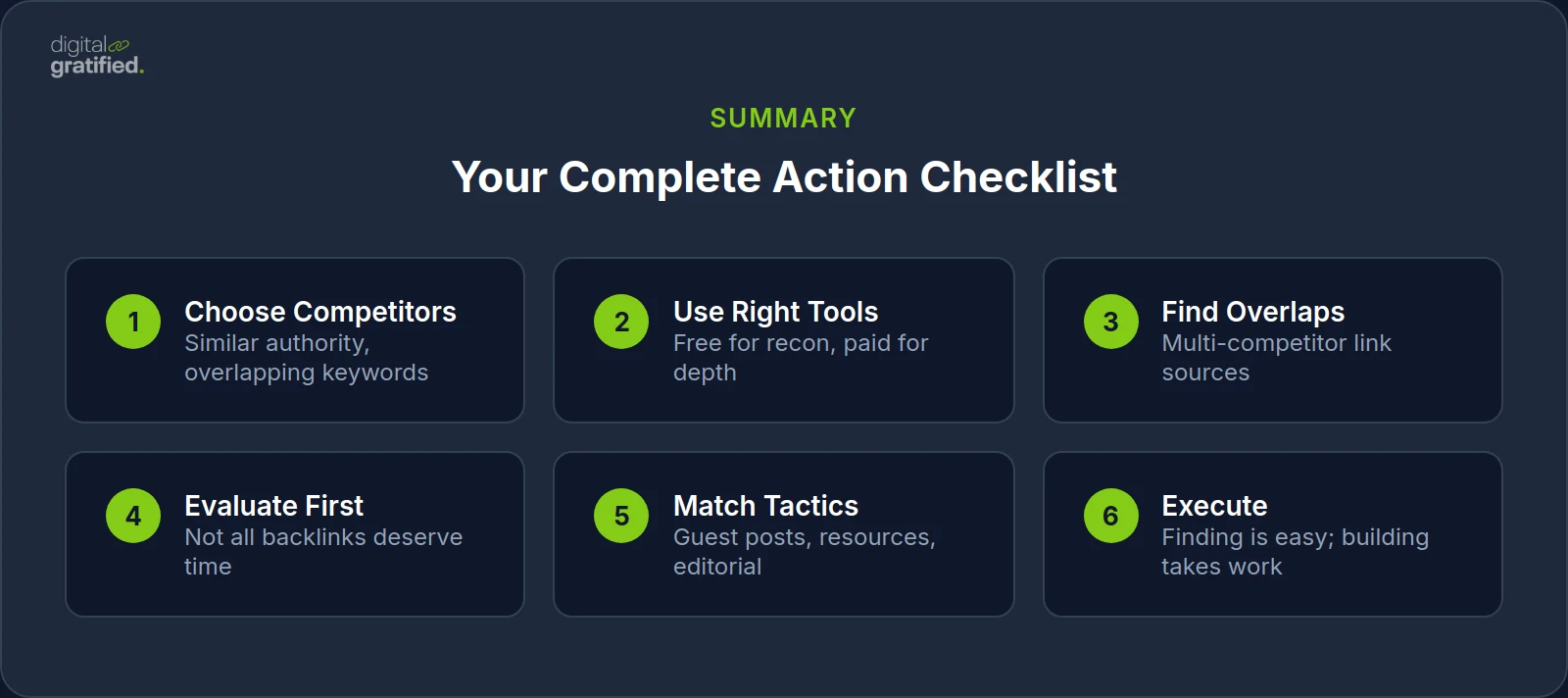
Competitor backlink analysis isn't complicated, but it requires discipline:
Choose the right competitors (similar authority, overlapping keywords)
Use appropriate tools (free for reconnaissance, paid for comprehensive analysis)
Find the overlaps (sites linking to multiple competitors are your best opportunities)
Evaluate before pursuing (not all backlinks deserve your time)
Match tactics to opportunity type (guest posts, resources, editorial, broken links)
Be realistic about execution (finding links is easy; building them takes work)
The companies that win at link building aren't the ones who find the most competitor backlinks. They're the ones who systematically pursue the right opportunities, create content worth linking to, and execute consistently over time.
Start with the analysis. But remember: it's just the beginning.
Need Help Building Links at Scale?
Competitor analysis gives you the roadmap. But if you need help with execution (actually building the links you've identified) that's where working with specialists can accelerate your results.
Digital Gratified helps SaaS and B2B companies build sustainable link building programs. We handle the outreach, relationship building, and content creation so you can focus on running your business.
Whether you're doing it yourself or looking for support, the key is taking action on what you find. The analysis is only valuable if you execute on it.
Let's Scale Your SaaS Together
Get a custom SEO and link building strategy tailored for your SaaS business.
Get SEO insights that actually move rankings
Link building tactics, case studies, and SaaS SEO playbooks. No fluff, no spam.