An honest look at seven link building marketplaces in 2026 (Collaborator, GuestPostLinks, NoBS, MeUp, Insert.link, Bazoom and WhitePress) plus when an agency will outperform every one of them.

Founder, Digital Gratified
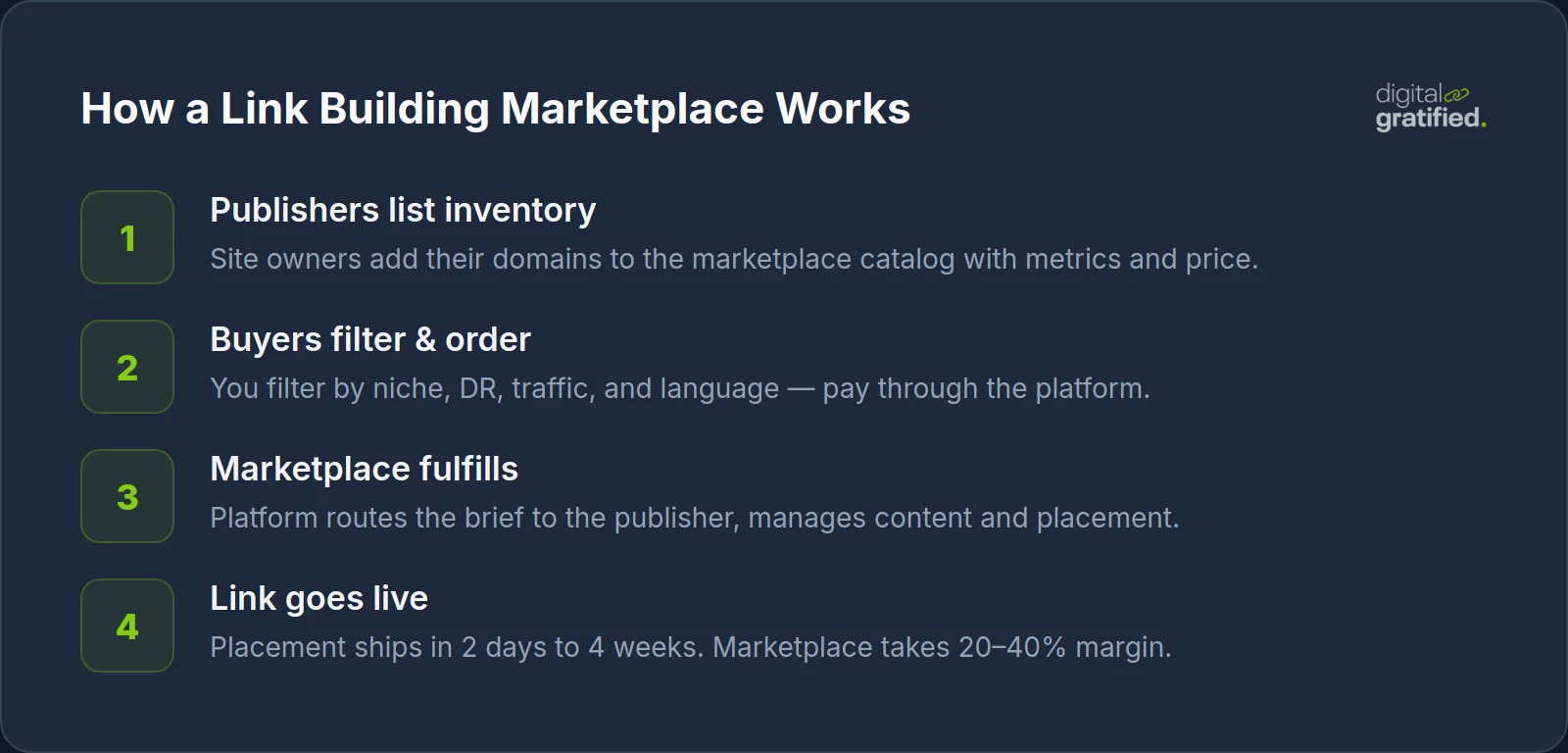
A link building marketplace is a self-serve catalog of websites willing to publish a guest post or insert a link, usually with domain rating, traffic, niche and price shown upfront. You filter, pick a site, pay, and the placement arrives anywhere from two days to four weeks later.
The model looks transparent, but the reality is more nuanced, as inventory often recycles across buyers and metrics can be inflated. This guide reviews seven of the most-searched link building marketplaces in 2026, what each is good for, and when an agency relationship will outperform a marketplace on every meaningful KPI.
What a Link Building Marketplace Actually Is
A link building marketplace sits between three groups: publishers (site owners willing to sell guest posts or niche edits), buyers (SEOs, in-house marketers, agencies), and the platform itself, which takes a margin on every transaction.
The platforms typically offer:
A searchable catalog with metrics like Ahrefs DR, Semrush AS, organic traffic estimates, niche tags, and language
Filters for country, topic, link type (guest post vs. niche edit), and price band
An order workflow you send the brief and the URL, the marketplace handles publisher communication and delivery
Some level of QA on placements (varies wildly between platforms)
New to link building? Read our primer on what link building is in SEO before you start comparing platforms.
Agency vs. Marketplace: The Tradeoff Most Buyers Miss
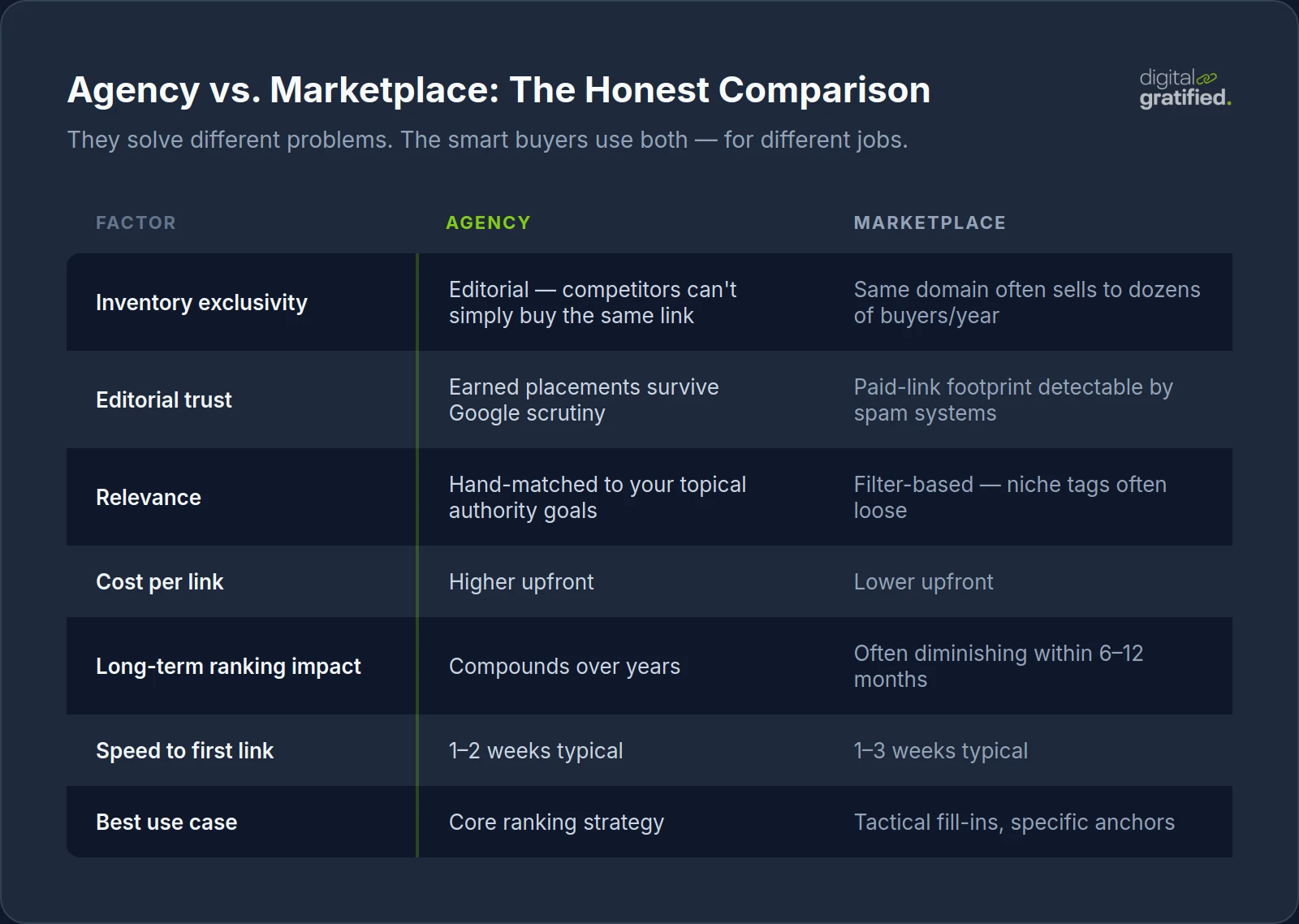
Marketplaces solve speed and selection. Agencies solve strategy and quality. The mistake we see most often is treating these as competing options for the same job: they aren't.
A marketplace gives you a list of sites that have agreed to accept paid links. By definition, that inventory has been pitched to (and bought by) many other buyers, and the same domain you're paying $400 for may have sold placements to competing companies in your vertical. Google's spam policies list "buying or selling links for ranking purposes" as link spam unless the link carries a nofollow or sponsored attribute, so a site that sells links openly is exactly the pattern its systems look for.
An agency builds links the manual way: original outreach, custom content, sites that don't sit in any public catalog, and (most importantly) editorial placements that aren't being sold to your competition the same week. The cost per link is higher; the long-term ranking impact per link is meaningfully different.
Our position at Digital Gratified is that marketplaces are not categorically bad, but they work as a tactical supplement, not as a primary strategy. A program built mainly on marketplace placements ends up with links any competitor can buy the same week, which is why we lead with manual outreach and editorially earned placements.
When a Marketplace Is the Right Choice
You need a specific anchor on a specific site, fast local citations, niche edits on already-mentioning posts, language-specific placements
You're filling out a portfolio for a client deck and need verifiable, shareable receipts
You're testing a new vertical and want a rough sense of placement costs before scaling
The link is part of a brand mention strategy where the placement matters more than the SEO juice
When an Agency Will Outperform a Marketplace
You need rankings, not just links relevance and editorial trust signals matter more than DR
You operate in a competitive vertical (SaaS, fintech, healthcare) where Google scrutiny is high
You want links your competitors can't simply replicate by paying the same fee
You don't have an in-house team to vet inventory, manage briefs, and audit deliverables
You're building a long-term backlink profile that will be reviewed in due diligence (acquisitions, funding rounds)
If you run a marketing agency or freelance practice and want to deliver managed link acquisition to your clients without the marketplace risks, our white label link building service handles strategy, prospecting, content, and placement under your brand.
The 7 Best Link Building Marketplaces in 2026
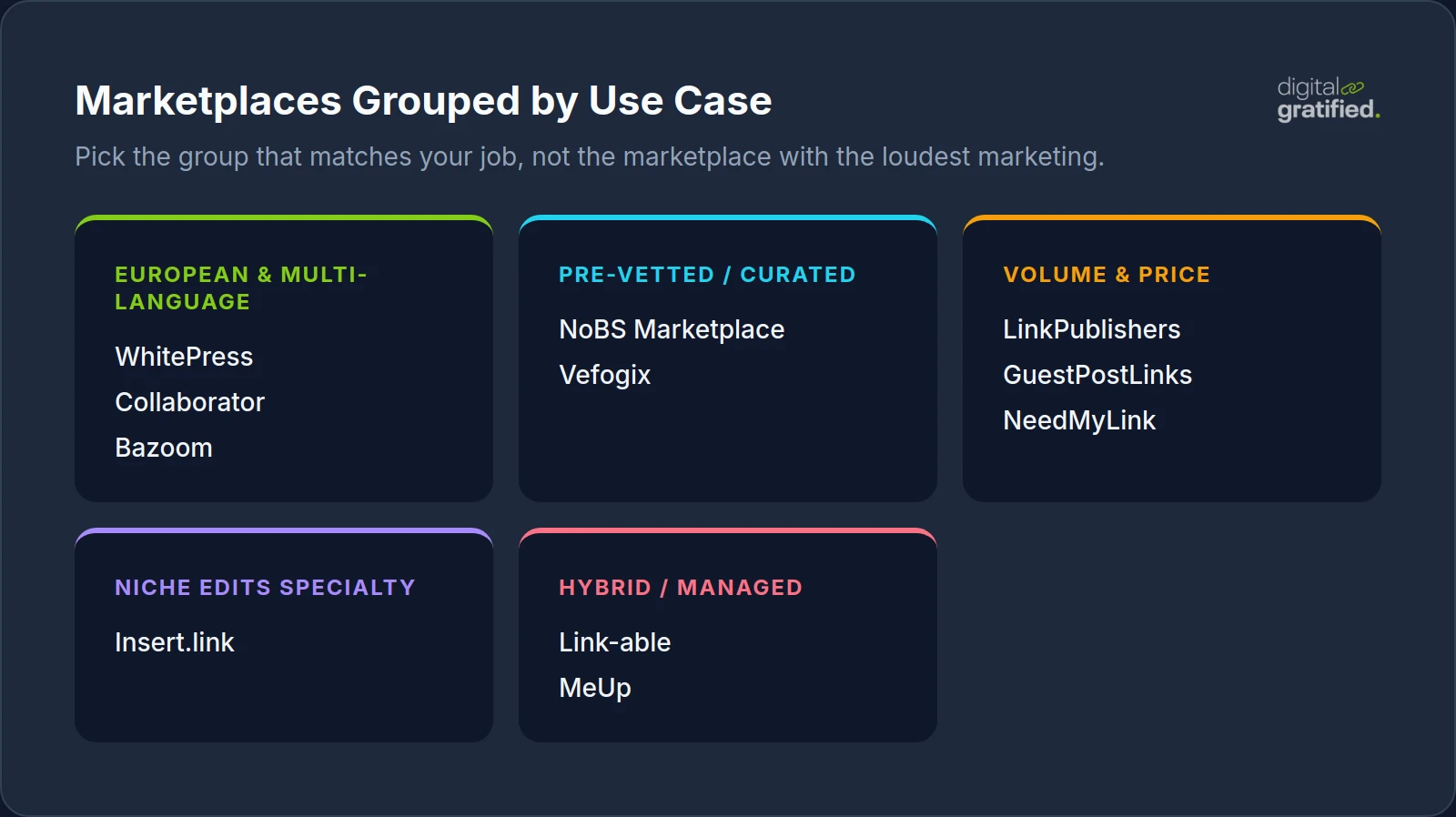
Below is an honest read on seven marketplaces buyers search for most in 2026, including collaborator.pro, whitepress and more. We've grouped them by use case rather than ranking them, because the "best" marketplace depends entirely on what you're buying.
1. Collaborator.pro
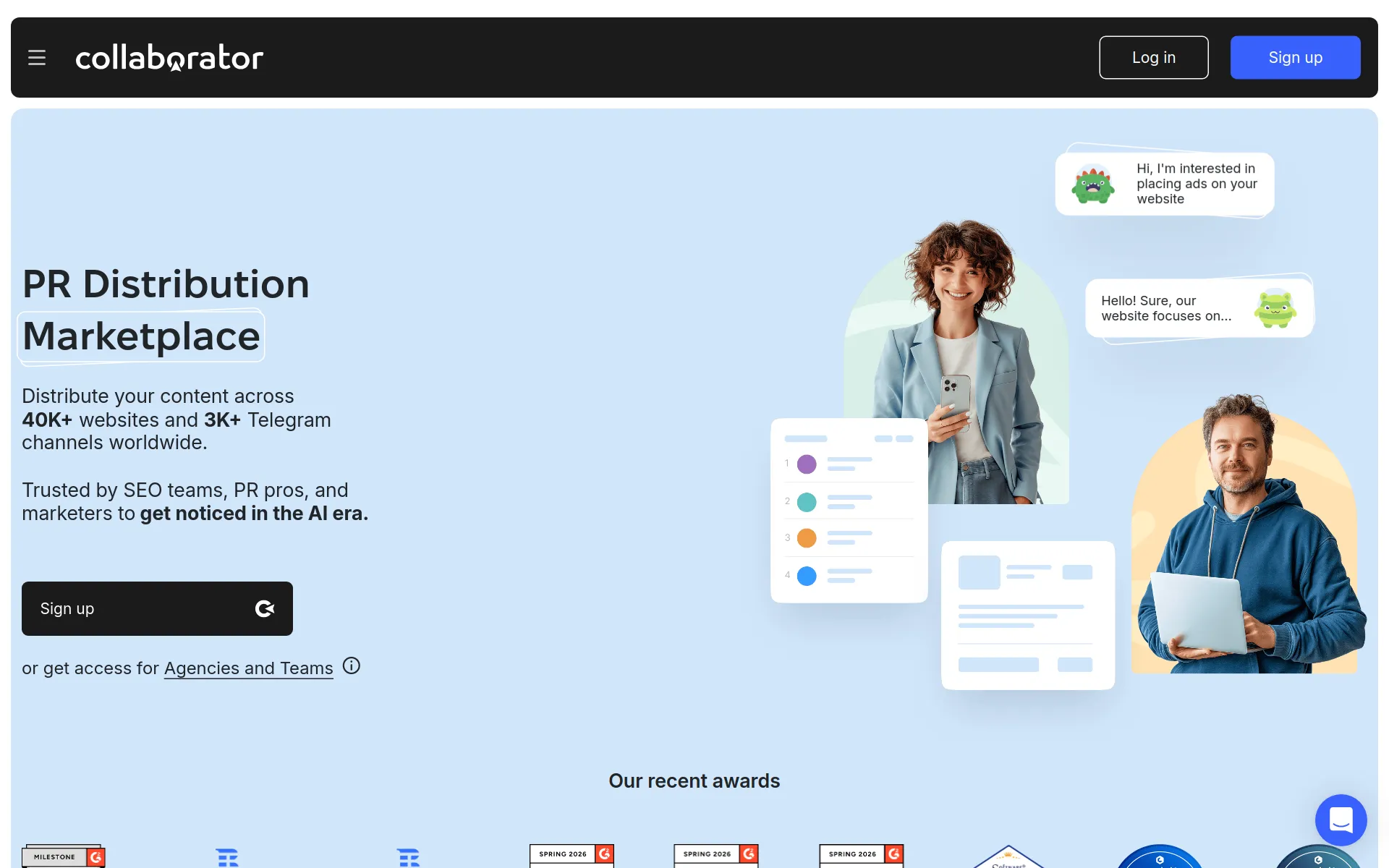
Collaborator.pro is a Ukraine-headquartered platform that has grown into one of the largest content-and-link marketplaces in Europe, with an inventory north of 40,000 sites across English, Polish, Spanish, German, French, and most CEE languages. The catalog is unusually well-instrumented: each site shows live Ahrefs DR and traffic, language, niche tags, content language requirements, and placement examples. Pricing is wide: from roughly $20 for low-DR regional sites to $1,500+ for major media. The platform also runs a writer marketplace, so you can order the article and the placement in one workflow. The honest limitation is the same as every volume marketplace: sites that have agreed to publish paid content tend to publish a lot of it, and that pattern is detectable.
Best for: Multi-language campaigns and Eastern European market coverage where most US-focused marketplaces are thin.
2. GuestPostLinks
GuestPostLinks runs a large catalog with transparent metrics and end-to-end fulfillment, with stronger inventory in the marketing, business, technology, and crypto verticals, plus a notable selection of high-DR news sites. They offer bulk-discount tiers for buyers ordering 20+ placements per month. The platform also surfaces "real traffic" filters that help you skip the inflated-DR-zero-traffic listings that plague most marketplaces. As with all volume platforms, the inventory overlap with competing marketplaces is high, and the same domain often sells many placements per month.
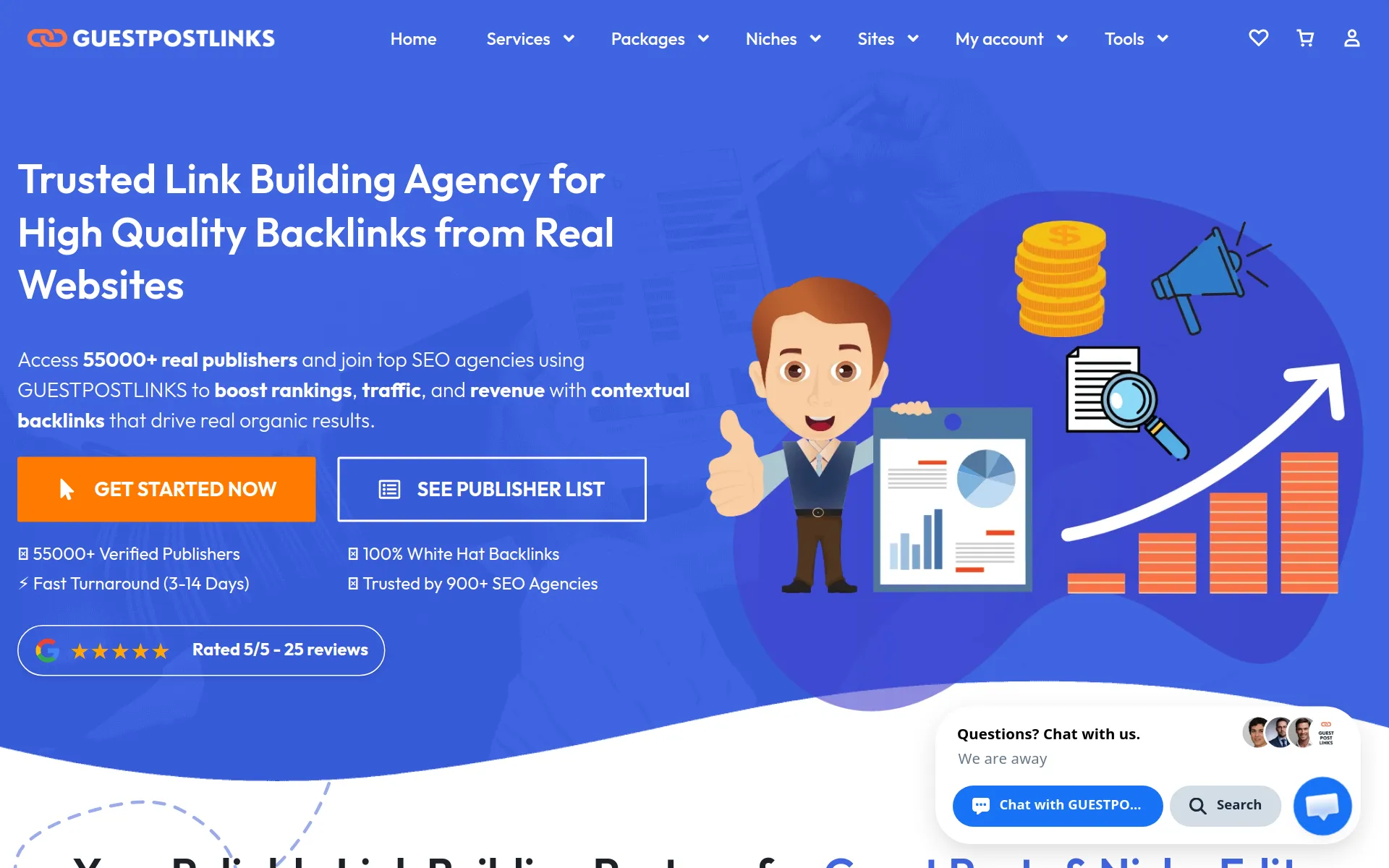
Best for: B2B, tech, and crypto buyers prioritizing price-per-link in competitive English-language niches.
3. NoBS Marketplace (by Authority Builders)
NoBS Marketplace is the Authority Builders self-serve arm, and arguably the most quality-obsessed catalog on this list. Every site goes through a manual screening for traffic legitimacy, content quality, link profile health, and "footprint" risk before it's listed. The team rejects the majority of sites that apply. The catalog is meaningfully smaller than the volume players (closer to 2,000 vetted domains), but the per-link confidence level is the highest in the category. Expect to pay $150 to $1,500 per placement depending on DR and traffic. Order delivery typically lands in 2 to 4 weeks because publishers aren't being run as content farms.
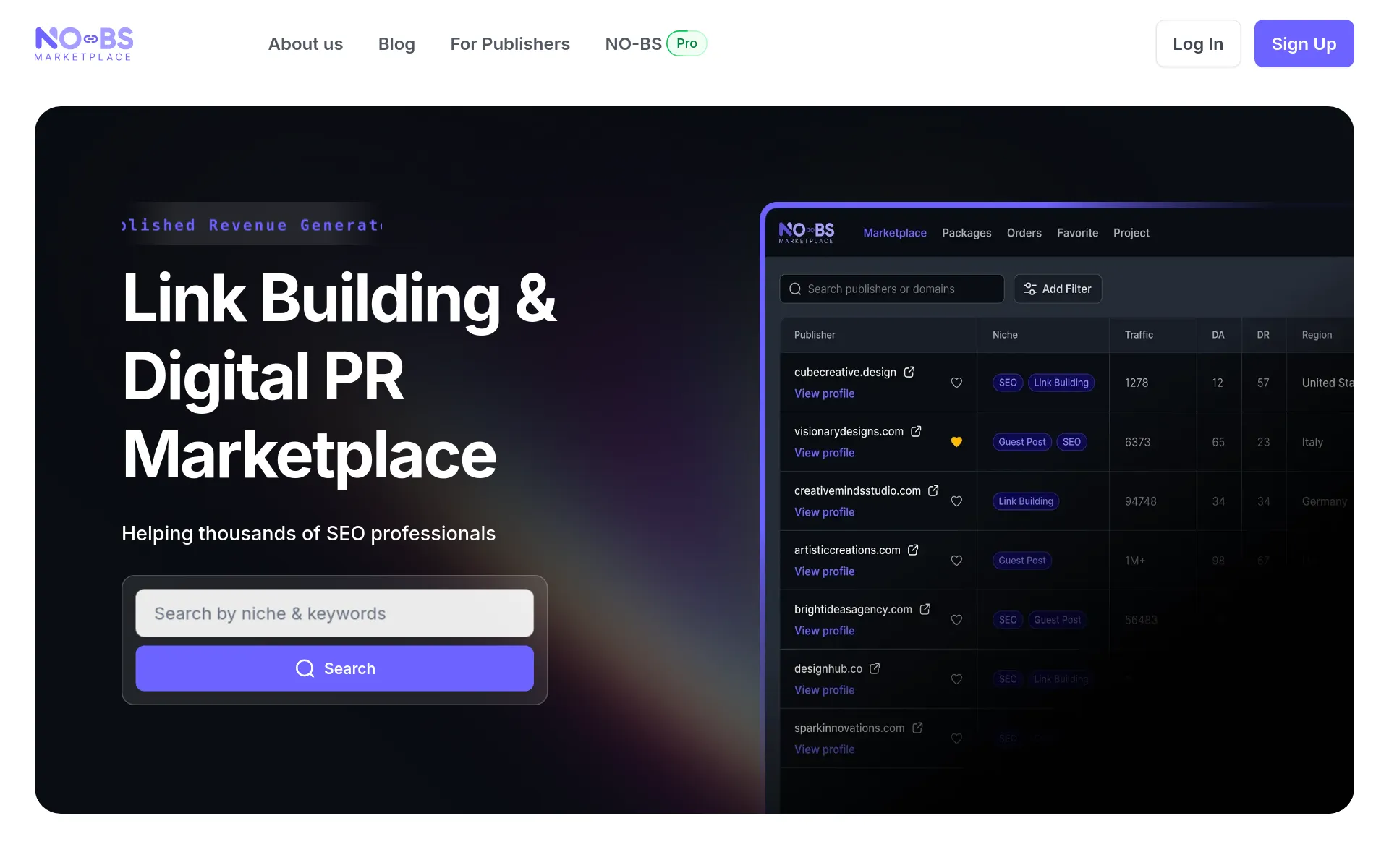
Best for: Buyers who've been burned by inflated DR sites and want pre-vetted inventory at a slower, higher-quality cadence.
4. MeUp
MeUp is a content collaboration platform that operates partly as a link marketplace and partly as an influencer-style placement network. It skews European with growing US inventory, and is strongest in lifestyle, ecommerce, beauty, travel, and B2C verticals where brand mention value matters as much as link equity. The interface is closer to an influencer marketplace than a traditional link platform: you brief a campaign, the platform matches publishers, and approvals happen in-app. The model suits brand-building campaigns better than pure SEO plays, and it's one of the few marketplaces where the placements can include sponsored content disclosures without losing buyer demand.
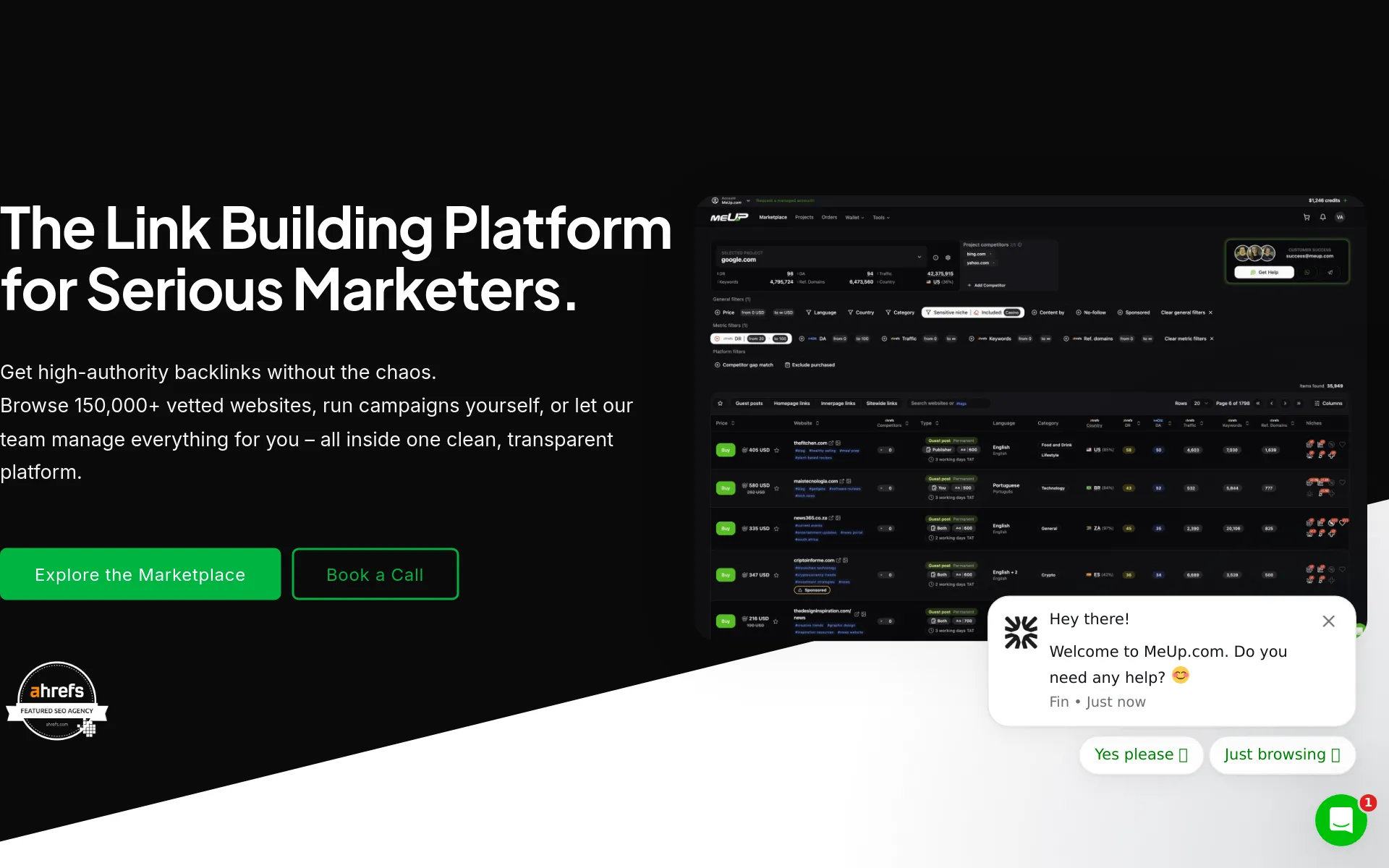
Best for: B2C and ecommerce brands blending link building with influencer-style brand placements.
5. Insert.link
Insert.link is a smaller, fast-moving marketplace built around niche edits: paying a publisher to add a link inside an existing, already-indexed article rather than commissioning a new guest post. This avoids the "new content on an old domain" footprint that some marketplaces leave, and it shortens delivery to days rather than weeks. The catalog is narrower than the giants and skews English-language, but for niche edits specifically the platform is well-built: including filters for the age of the host article (older = more authority transferred) and current ranking position.
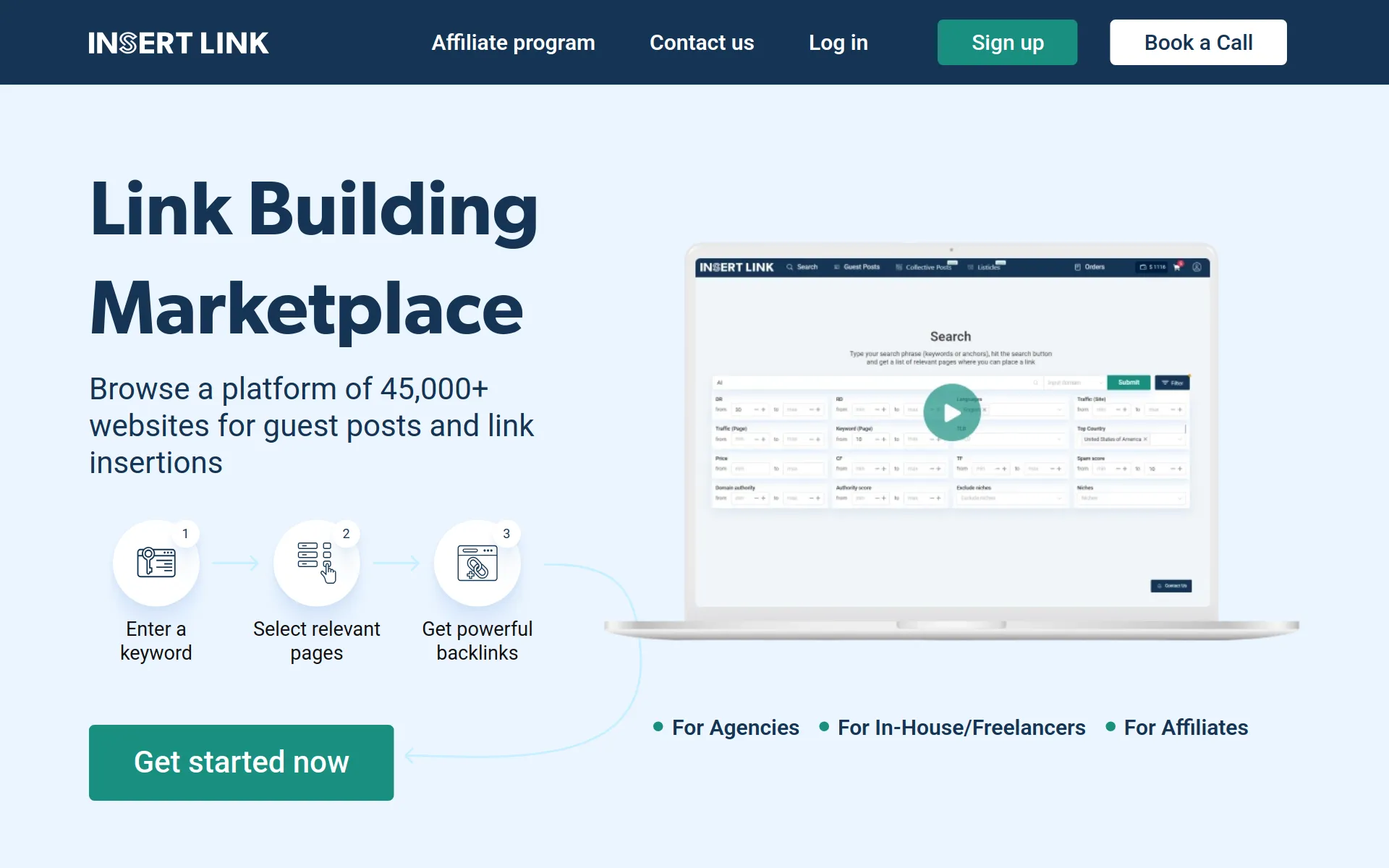
Best for: Buyers running niche edit-only strategies or supplementing guest post campaigns with faster placements.
6. Bazoom
Bazoom is a Danish content marketing and link building marketplace with strong inventory across the Nordics (Denmark, Sweden, Norway, Finland), Germany, and the broader European market. They push the "real media" angle harder than most. The inventory leans toward news, magazine, and trade publication sites rather than typical guest-post blog networks. The platform also offers content writing in 20+ languages and has been steadily adding US and UK media inventory. The trade-off for the media-leaning catalog is higher per-placement pricing, but the editorial standards and natural content fit tend to be measurably better.
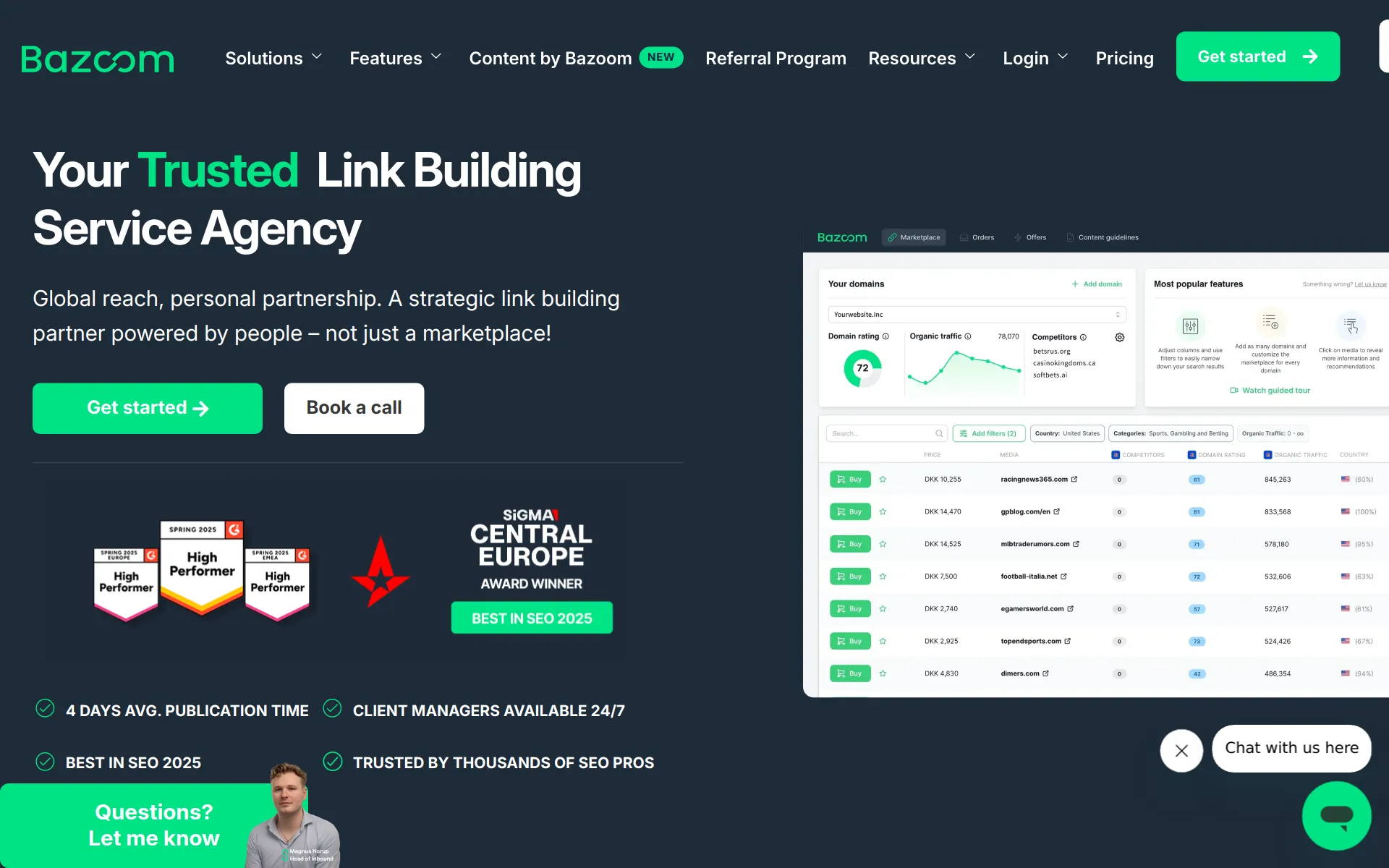
Best for: Nordic and European campaigns prioritizing news, magazine, and trade media placements.
7. WhitePress
WhitePress is one of the largest European marketplaces, with inventory across 40+ countries and strong native-language coverage in Polish, German, English, Spanish, Italian, French, Czech, Slovak, Hungarian, and beyond. Beyond guest posts, the platform offers content marketing campaigns, sponsored articles, native ads, and influencer placements, making it more of a multi-channel brand and SEO platform than a pure link marketplace. Used widely by European agencies as a primary inventory source. The breadth comes with the trade-off of less curation per placement; you'll need to do your own quality filtering on a per-domain basis.
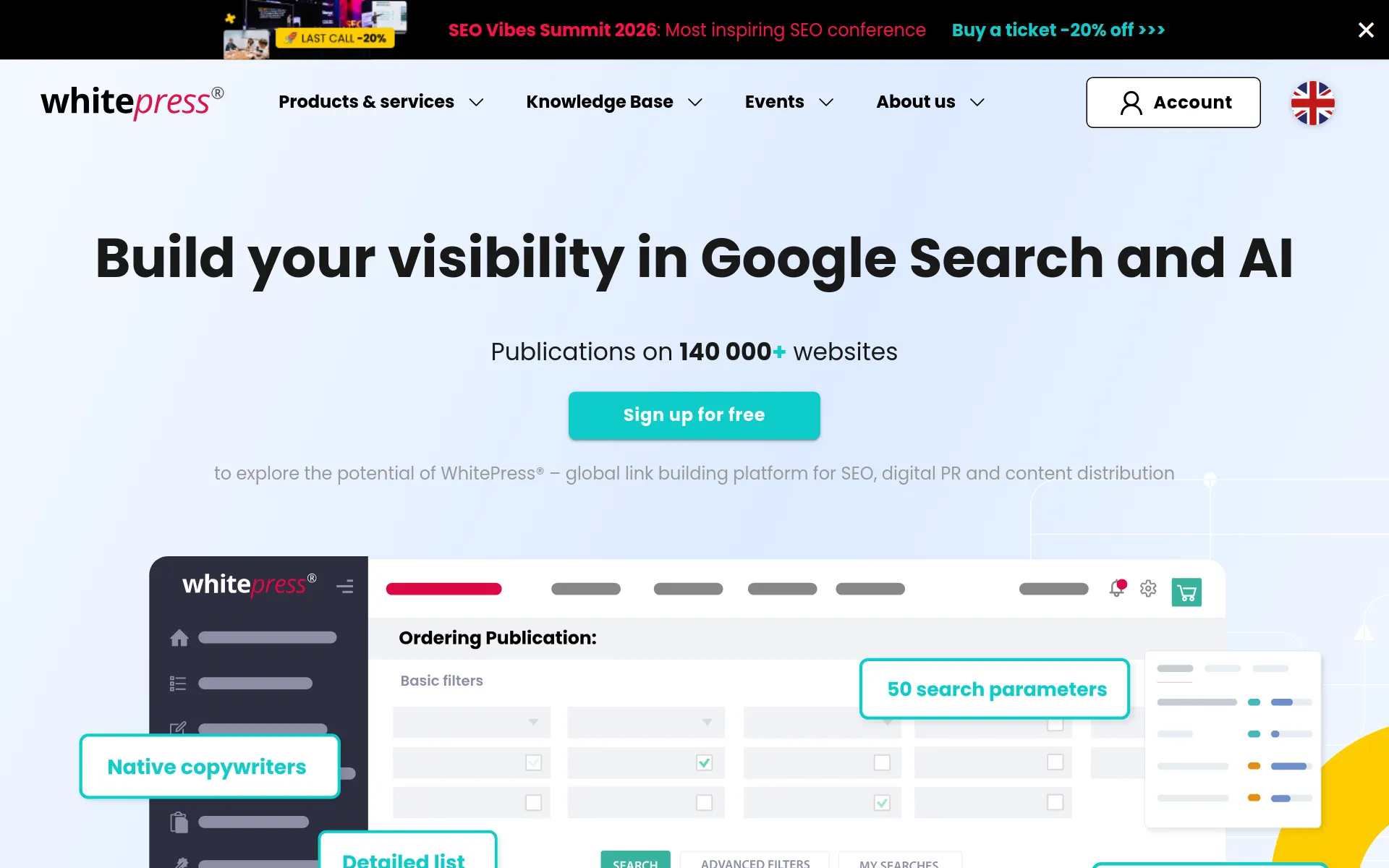
Best for: Buyers needing multi-country, native-language European coverage in one platform.
Are Free Link Building Marketplaces Worth Using?
The "link building marketplace free" search is a popular one, and the honest answer is short: free marketplaces are almost always either (a) directories that don't pass meaningful link equity, (b) link exchange networks that violate Google's quality guidelines, or (c) freemium platforms where the free tier shows you the catalog but you pay per placement.
If you're working with no budget at all, you're better off doing manual outreach for relationship-driven placements than pursuing free marketplace listings. Our guide on link building outreach walks through the workflow in detail.
What to Watch For Before Buying From Any Marketplace
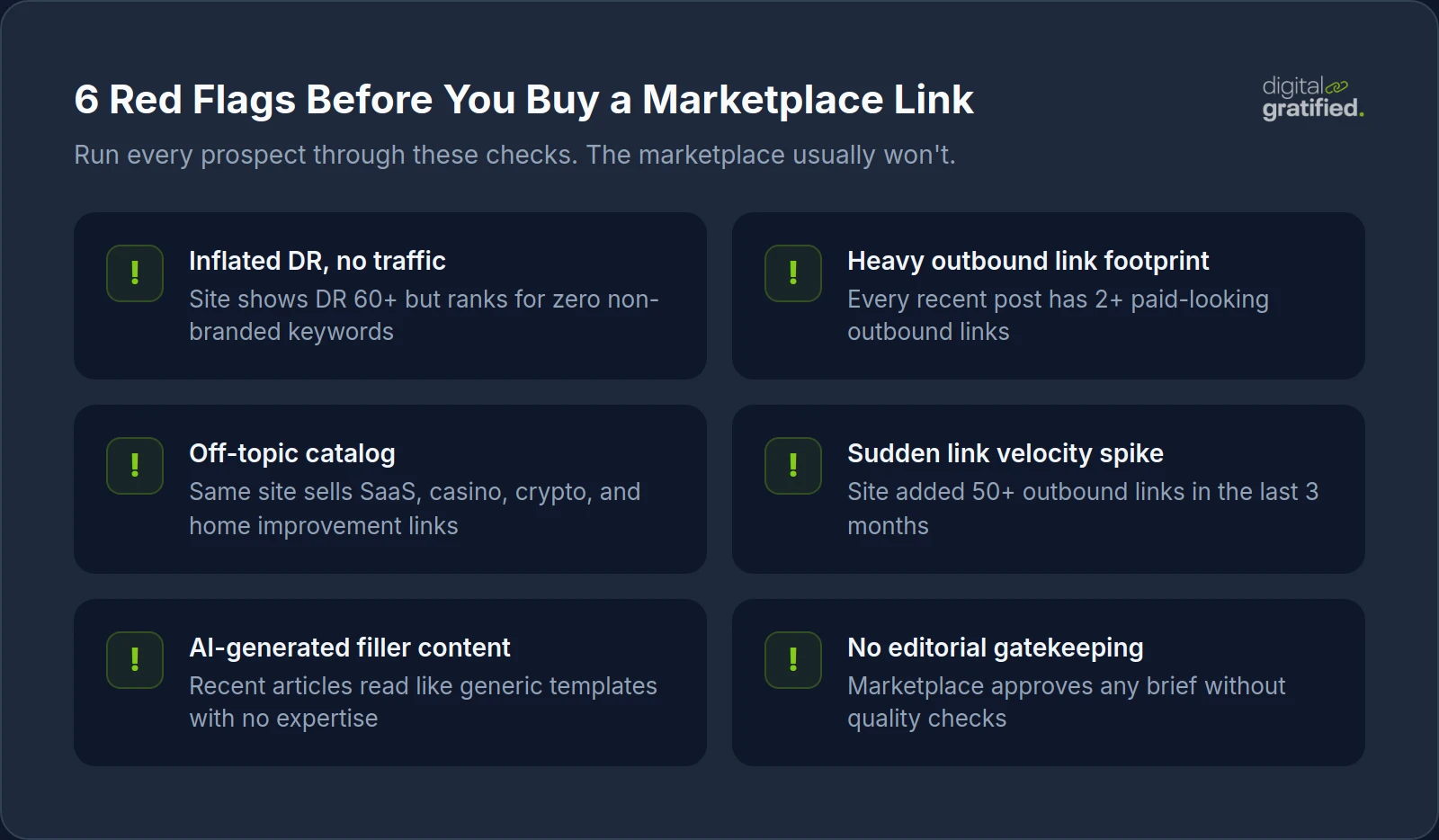
Before you spend a dollar on any marketplace, run every prospective placement through these checks. Most marketplaces don't do this for you.
Real organic traffic does the site rank for non-branded keywords? Many marketplace sites have inflated DR but near-zero organic traffic. Use Ahrefs or Semrush to verify.
Outbound link patterns does every recent post have 2+ outbound paid-looking links? That's a footprint Google's algorithms detect easily.
Topical relevance a SaaS link from a "general business" site that also covers cooking, gardening, and crypto is not a relevant link. It's a paid mention.
Content quality of recent posts if the last 10 articles read like AI-generated filler, the site is being run for monetization, not for readers.
Link velocity sites that suddenly added 50+ outbound links in the last 3 months are the kind of sites spam updates tend to catch.
For deeper context on what Google actually looks for in link quality, see our piece on the future of link building in the AI search era.
Marketplace + Agency: How Smart Buyers Combine Both
The most effective in-house teams we work with don't treat this as a binary choice. They use:
An agency for the core of monthly link acquisition (the placements that actually move rankings and survive due diligence)
A marketplace for the tactical remainder (niche edits with specific anchors, language-specific placements, fast brand mentions)
The split works because the two channels solve different problems. An agency relationship gives you compounding ranking impact. A marketplace gives you on-demand tactical execution. Used together, they cover the full spectrum without overspending on either.
If you want to see what realistic per-link costs look like across both channels, our breakdown of link building pricing in 2026 covers the full spectrum.
Final Take
Link building marketplaces are useful tools when treated as tools (not strategies). They solve speed, selection, and on-demand tactical needs. They don't solve the harder problems: relevance, editorial trust, defensibility, and long-term ranking compound. Those still require manual outreach, content investment, and the kind of relationship-building that no catalog can shortcut.
Pick a marketplace from the list above when the use case fits. When the use case is "I need rankings in a competitive vertical, and I need them to stick," reach out to Digital Gratified instead. We build the kind of editorial placements that no marketplace can list.
About the author
Let's Scale Your SaaS Together
Get a custom SEO and link building strategy tailored for your SaaS business.
Get SEO insights that actually move rankings
Link building tactics, case studies, and SaaS SEO playbooks. No fluff, no spam.
You're subscribed!
SEO and link building insights, straight to your inbox.